I led design for a B2B mobile ordering platform for one of Finland's largest beverage importers, taking the work from field research and product definition through UX, visual identity, systems design and launch.
Restaurants and bars across Finland were still ordering wine and beer manually, mostly by phone and paper form. The process was slow for customers and gave Servaali limited visibility into what was being ordered and where things were getting stuck.
The business goals were plain: bigger average orders, more repeat orders, automatic processing internally, and a brand that felt current next to competitors. The design problem underneath was harder—this had to be genuinely faster than picking up the phone, or nobody would switch.
I ran in-person research with restaurant and bar managers across Helsinki, observing how ordering actually happened in their venues and during live shifts.
These weren't browsing eCommerce shoppers—speed and repetition mattered more than discovery.
What I learned
Observed — Managers were reordering familiar products during live shifts, often under significant time pressure.
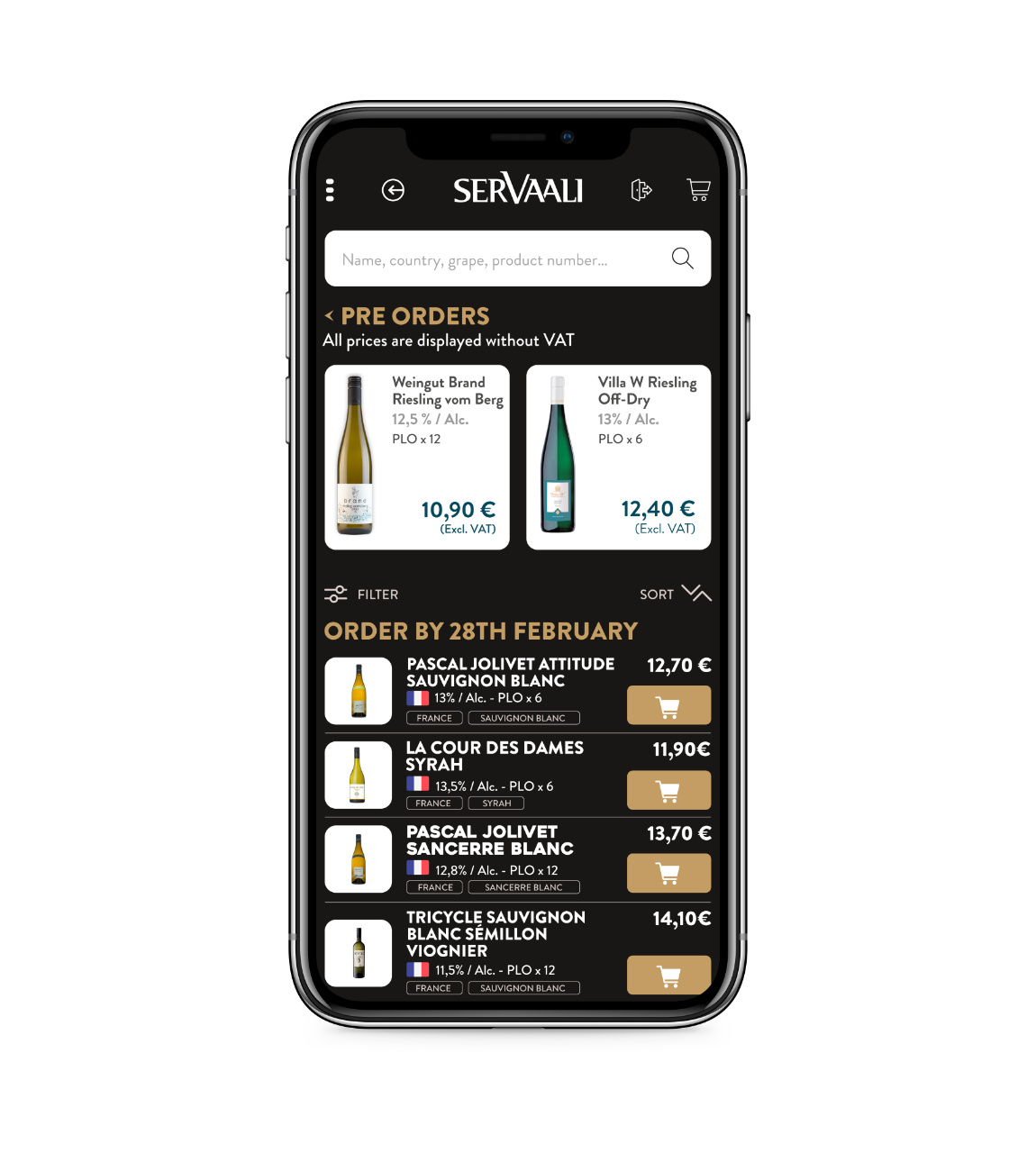
Design response — Account-first ordering, fast reorder, live stock availability and clear ex-VAT pricing.
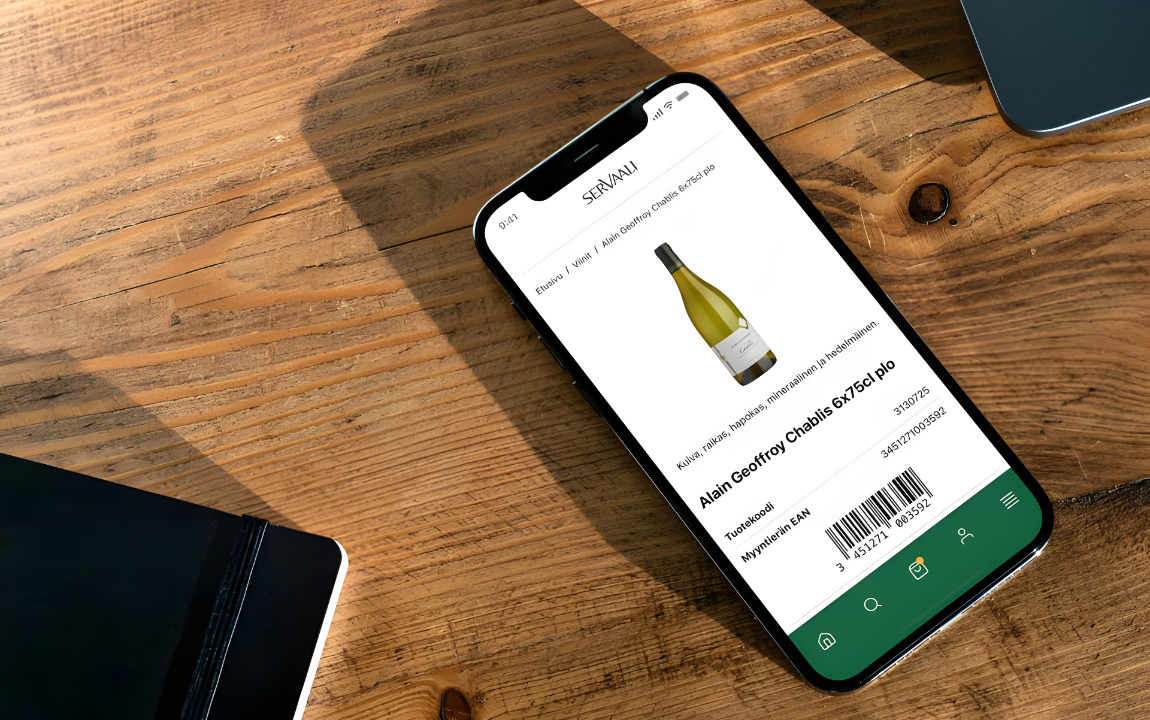
Account-first UX — Designed around fast reordering, live stock availability, explicit ex-VAT pricing and automated back-ordering — replacing the manual paper trail.
Design Language & System — Created a scalable visual language and design system optimized for high-efficiency mobile use.
Engineering & Systems — Worked directly with the lead engineer to map the experience onto the underlying microservices architecture, connecting customer data, availability, PIM and orders with existing ERP systems.
Field Validation — Put prototypes directly into managers' hands during live shifts, iterating through bi-weekly sprints into a closed-venue beta before nationwide rollout.
In-person field interviews with bar managers, observing live ordering routines in dark cellars during closing shifts.
Designed around speed rather than discovery—fast reordering, live stock availability and explicit ex-VAT pricing.
Built a scalable, high-contrast visual identity and design system optimized for rapid mobile use.
Designed automated stock control and back-ordering flows, working with engineering to connect them to the underlying systems.
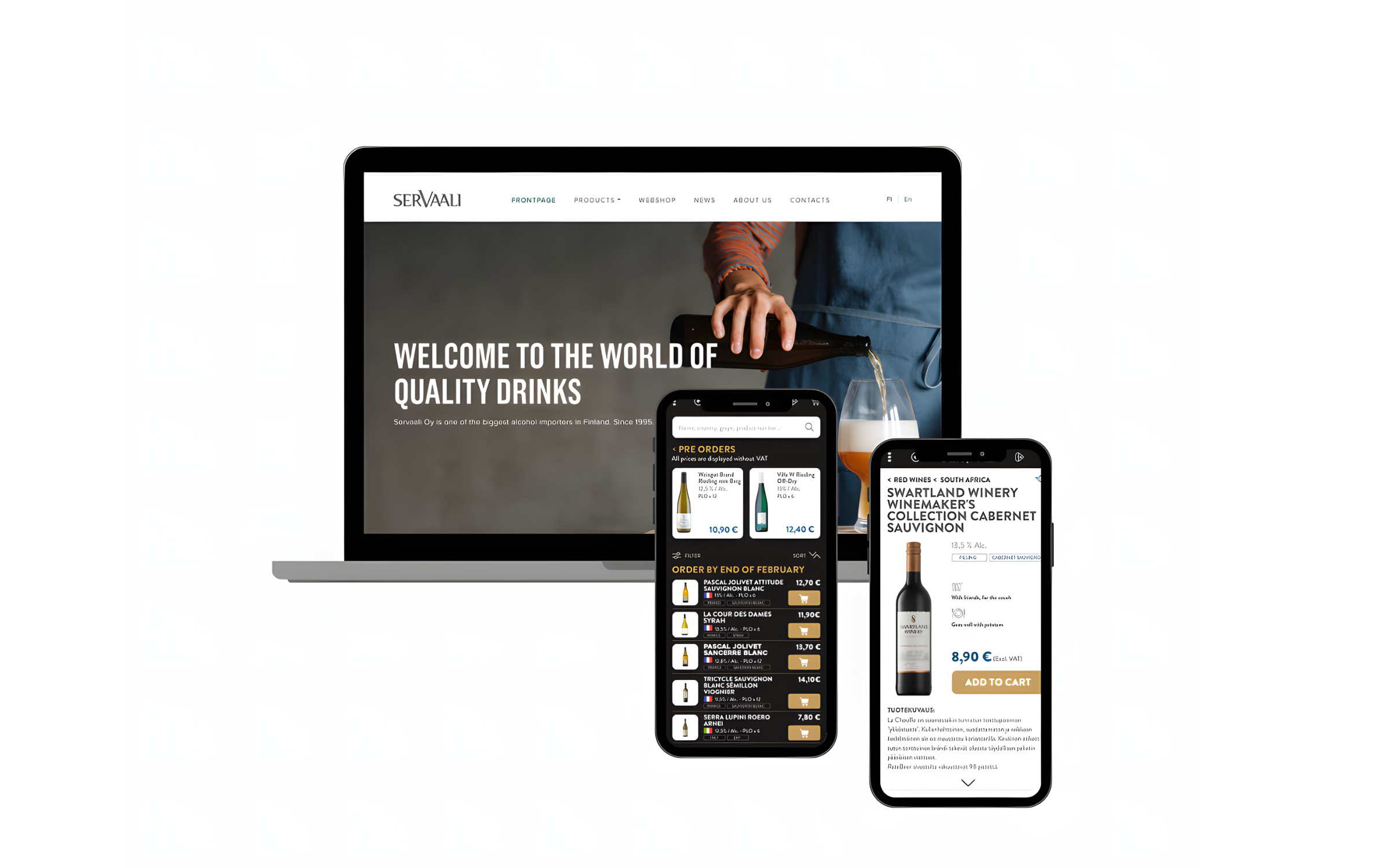
All client accounts moved from manual ordering to the new platform, which became central to Servaali's B2B operations. The design language later expanded into brewery operations too.
Customers noticed the difference in what they bought, not just how they bought it. One restaurant manager told Servaali they'd started ordering from product categories they'd never reached before, simply because those categories were now easy to find.
A monitoring dashboard gave the client visibility into errors and gaps themselves, while the modular architecture allowed new services to be added without disrupting the existing experience. The design later became a white-label solution, reused as the foundation for other ordering platforms beyond Servaali.